Back to Trustmi
Trustmi · Vendor Management · Use Case

Vendor Lifecycle

From the first invitation to a vendor you can prove is trusted.

Trustmi connects onboarding, validation, approval, vendor management and network intelligence into one system.

Trustmi — Trusted Network
The Problem

Onboarding shouldn't feel like paperwork.

Vendor onboarding can easily turn into a chain of forms, follow-ups, and disconnected approvals.
The challenge:
To create one clear journey for both vendors providing information and the teams responsible for validating it.

I designed the flow end to end: an email invite starts the process, and an AI-guided conversation helps the vendor provide what's needed. Approvals move between the people who own them, and the vendor's page brings the process and its context together. The Trusted Network gives validation teams visibility into a vendor's existing connections across the network, helping them spot relevant signals beyond the vendor's own submission.

ICP-Procurement

Procurement | Vendor Management | Business Operations

Needs

Needs a clear view of each vendor's onboarding status and what is still required.

Wants to move vendors forward without chasing people or slowing down the business.

Thinks

What information is still missing?

Who needs to review or approve this vendor next?

Is the vendor ready to move forward?

Procurement persona Empathy Map

Does

Coordinates vendor forms and validations across internal teams.

Can move onboarding forward once the required information and approvals are complete.

Feels

Feels responsible for keeping onboarding on track.

Gets frustrated when ownership is unclear or reviews cause delays.

Worries that an important step might be missed.

Procurement persona

Empathy Map

Secondary Users
InfoSec persona
InfoSec
Needs to validate the vendor's security posture
Compliance persona
Compliance
Needs to validate the vendor's legal documents and agreements
Vendor persona
Vendor
Needs a simple way to share what's required and track progress toward approval

Procurement is measured on

  1. Reliability (validation)Every check the vendor passed, visible before anyone approves.
  2. TimeHow fast a vendor goes from request to approved, against the team's average.
  3. Budget (negotiation)
Phase 1 — Paperwork → Digital

First, we turned the paperwork into digital forms.

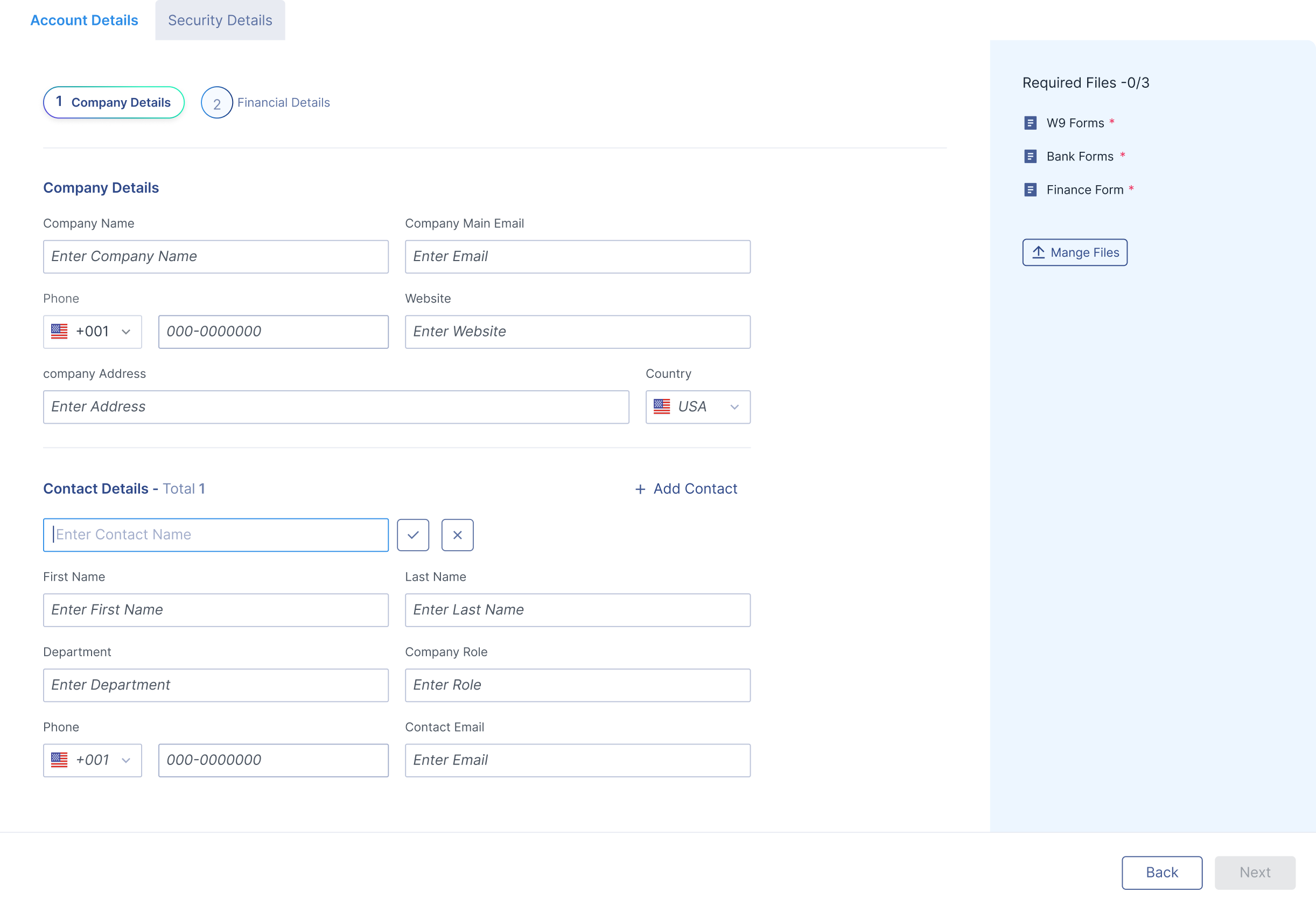
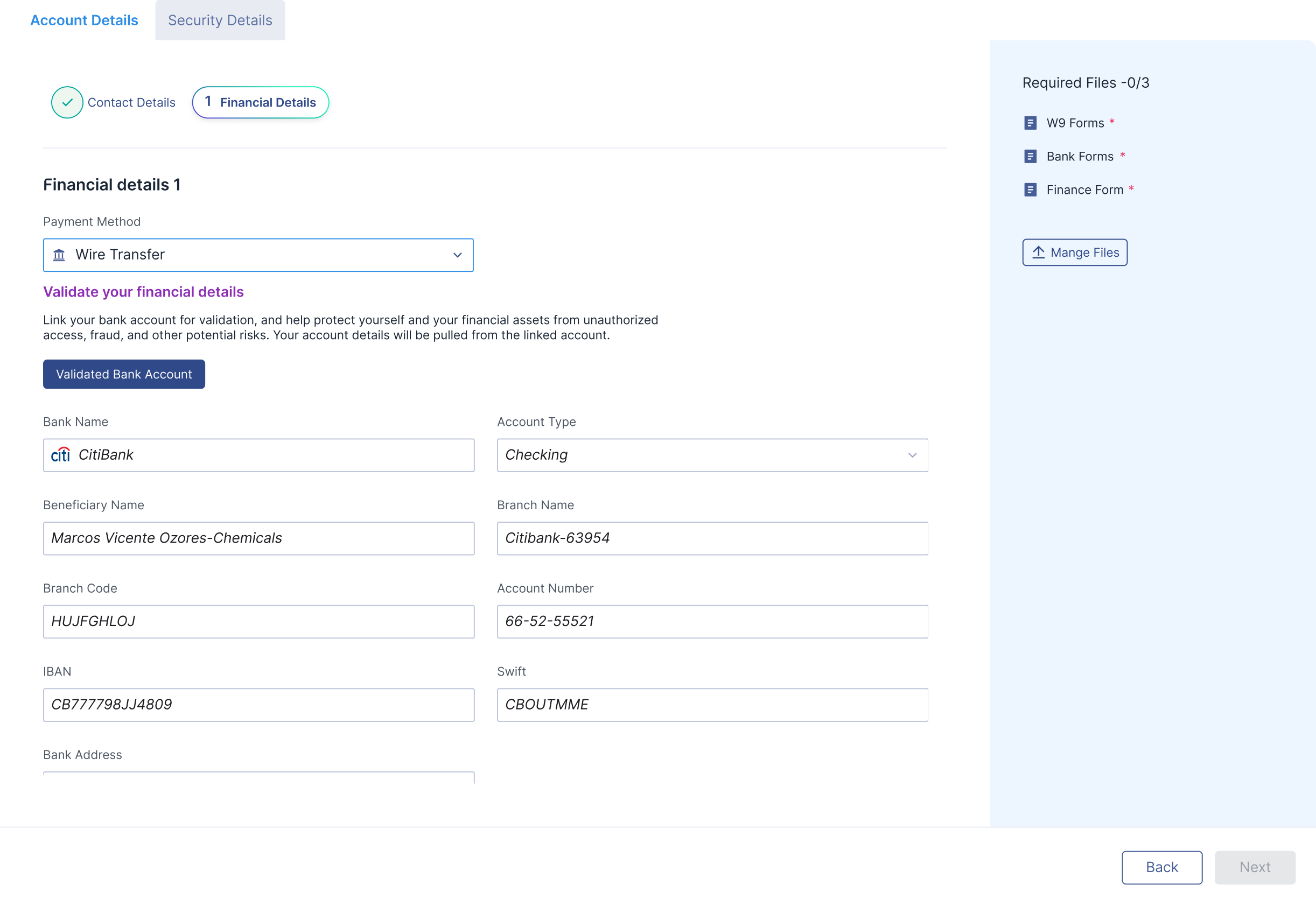
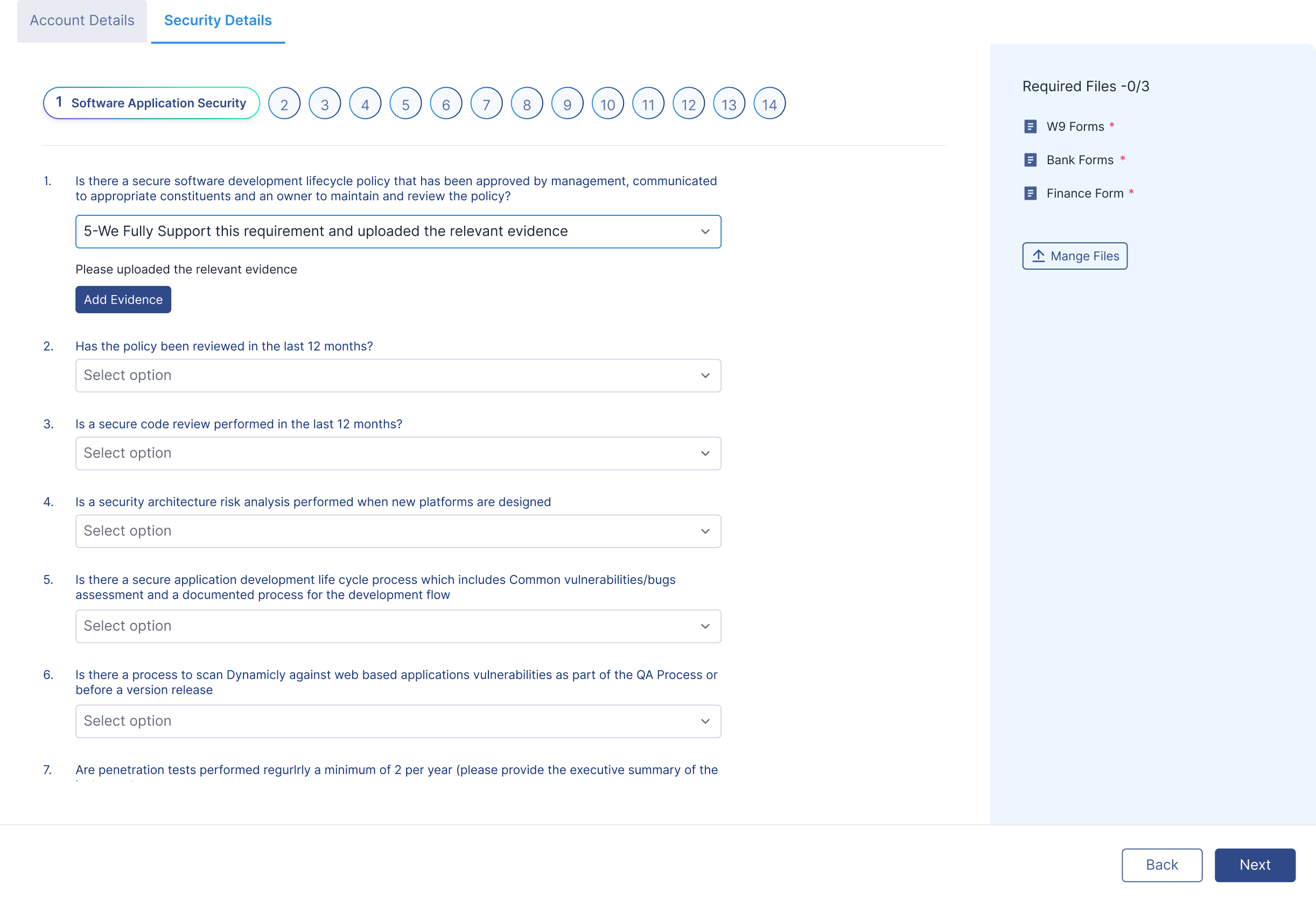
We mapped the onboarding process end to end and moved it into the vendor self-service portal: one registration wizard for company details, contacts, financial details and security questionnaires, with file uploads and automatic checks per section. For the first time, procurement and vendors had one place to work and talk.

Company and contact details form
Financial details and bank validation form
Security questionnaire and required files

Three years later, it still felt like paperwork.

The platform worked - but technology moved on, and so did our users.

What vendors told us (survey & analytics)

  • 68% of vendors surveyed said the forms were too long
  • 41% had to come back more than once to finish
  • ~60% started on mobile, but most switched to desktop to finish - the forms were too long for one mobile session

What our customers told us

  • Gaps found only after submit
  • Too many back-and-forth loops
  • Conversation not fully adapted
Phase 2 — Digital → Agentic

So we mapped the journey again - and handed the forms to an agent.

By then, Fortune 500 companies were managing vendor networks at a scale that made onboarding harder to coordinate. Trustmi already surfaced risk signals; the opportunity was to make the process faster and easier to manage. We kept what worked and redesigned the journey around its pain points. The agent uses existing data, asks only for what's missing, and validates answers as they come in.

1.Invite to onboardAgent
2.Review and ValidateAgent
3.Collaborate and ApproveAgent
4.Manage Vendor Lifecycle
5.Trusted network

Steps the AI agent improved

Vendor onboarding journey map, with the agent taking over steps 5 and 6 Zoomed detail: steps 5 and 6, conversational onboarding and real-time validation, highlighted in the journey map. Click to enlarge.
Step 1 - Invite to onboard

A vendor starts with a conversation, not a form.

Instead of a long form, the vendor onboarding agent asks for what it needs one question at a time and validates each answer along the way.

Step 2 - Review and Validate

One place to Review and Validate

Organizes and collects information into Identity, Organization, Financial, and Files, giving the internal team one place to review onboarding.

Step 3 - Collaborate and Approve

Approve it yourself, or bring in whoever needs to weigh in.

The vendor request is validated and brings the evidence into the decision, with AI available for context. Approve, flag, reject, or add approvers while keeping who approved, who is pending, and who owns the next decision clear.

Step 4 - Manage Vendor Lifecycle

One page for everything about the vendor.

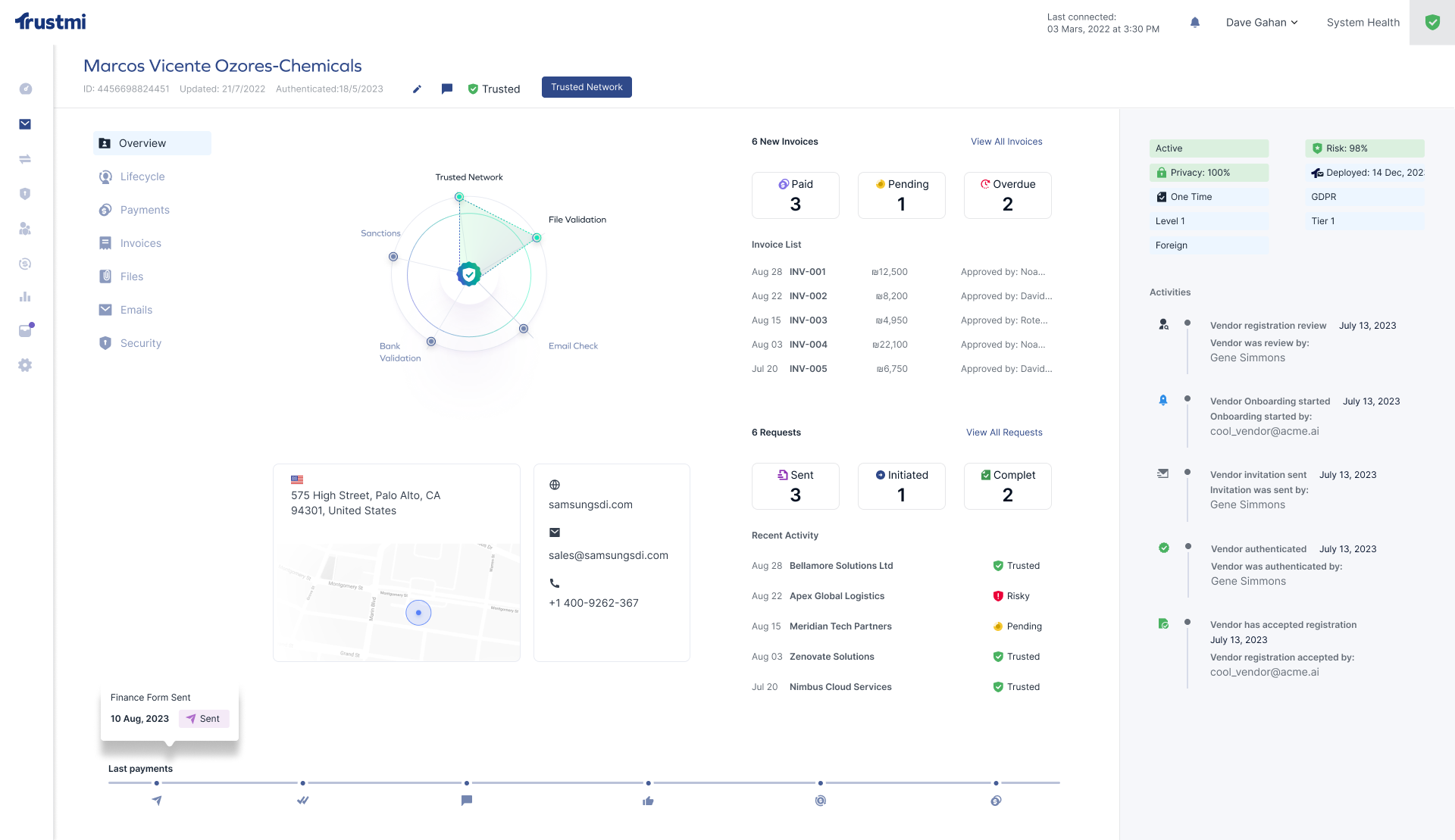
After approval, the Vendor Page becomes the permanent home of the relationship: company information, status, validations, files, requests, activity and history — and how they change over time. This is no longer onboarding. It is the ongoing lifecycle.

Vendor page — overview, invoices, activity and risk
Step 5 - Trusted network

Making vendor trust easier to assess by turning network connections into a clear, explorable view.

The Trusted Network zooms out to the evidence around it: the companies it works with, verified and new relationships, shared connections, conflicts and risk signals across the customer's network.

Click a category to open it, or a vendor to see its brief
Share. Validate. Approve.

The vendor journey evolved from disconnected forms and approvals into a guided process for vendors and validation teams.

An AI-guided conversation helps vendors share what's needed. Clear validation stages and coordinated approvals help teams move each vendor forward, with the Trusted Network adding context from the vendor's existing connections.

Based on Q3 data only.

Customer Results, Reported by Trustmi