Back to Trustmi
Trustmi · Security & Risk · Use Case
Email Security & Relationships

From email risk detection to context, investigation and action.

Trustmi helps security teams detect suspicious activity across financial email communication, understand the relationships behind the risk, and investigate before it reaches the payment process.

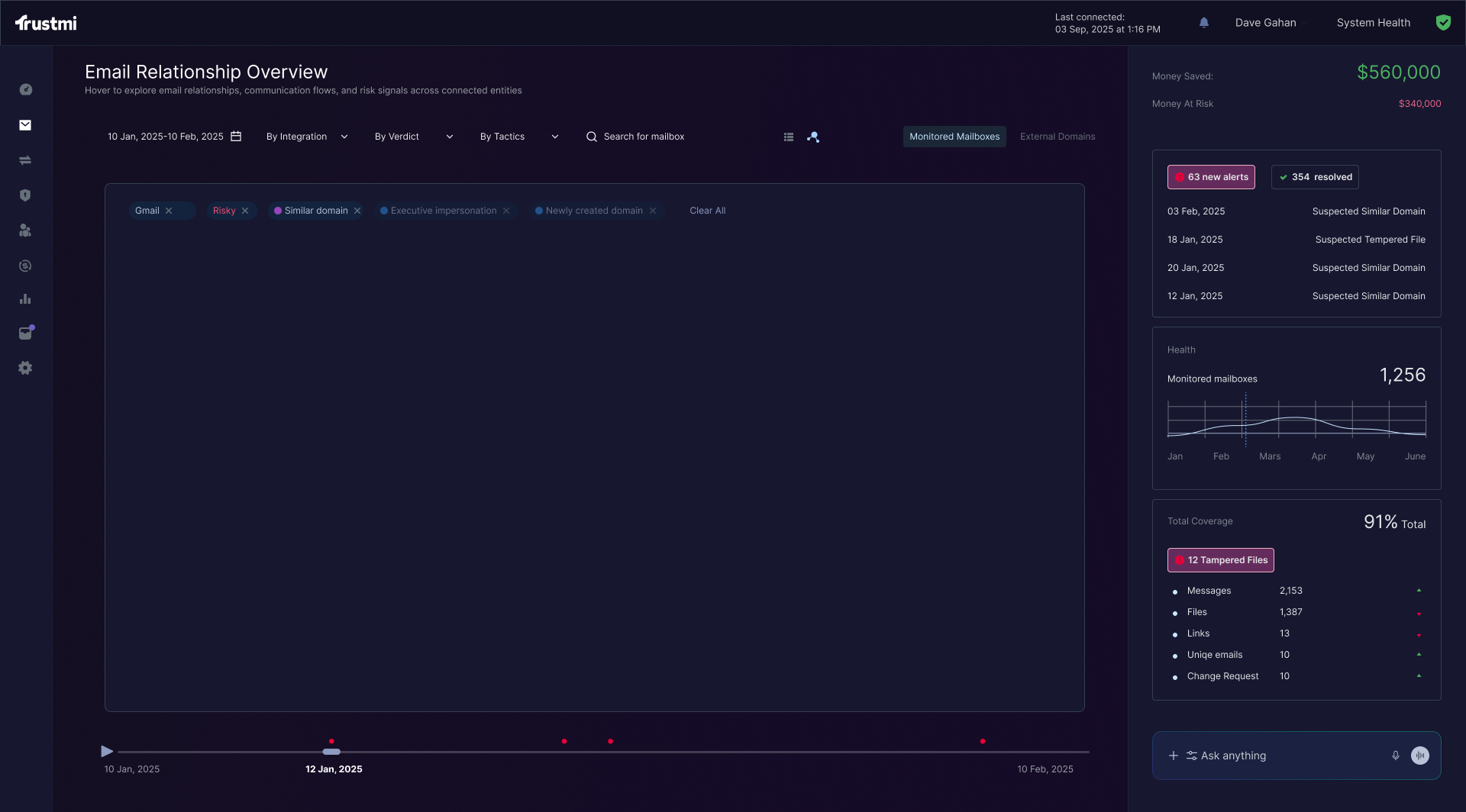
Email Relationship Map — full network

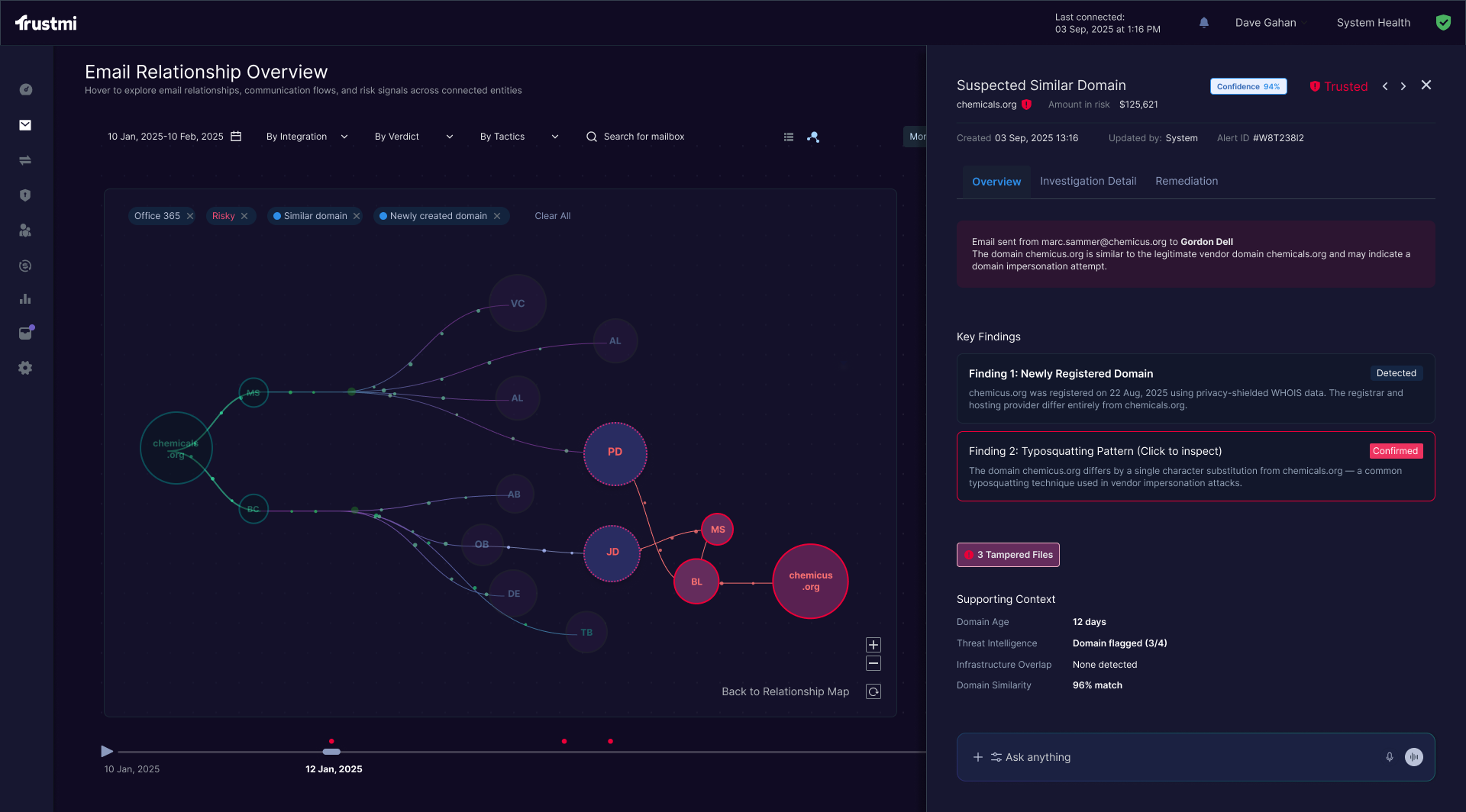
The Email Relationship Map — employees, vendors and communication relationships, live.
The Problem

Detecting risk is only the beginning.

Trustmi can scan domains, mailboxes, files and communication patterns to detect suspicious activity. But an individual alert does not always provide enough context to understand whether something is truly dangerous.

A CISO needs to answer two questions: where is the risk? and what is this risk connected to? Understanding the threat requires connecting the signal to the people, vendors, communication and evidence around it.

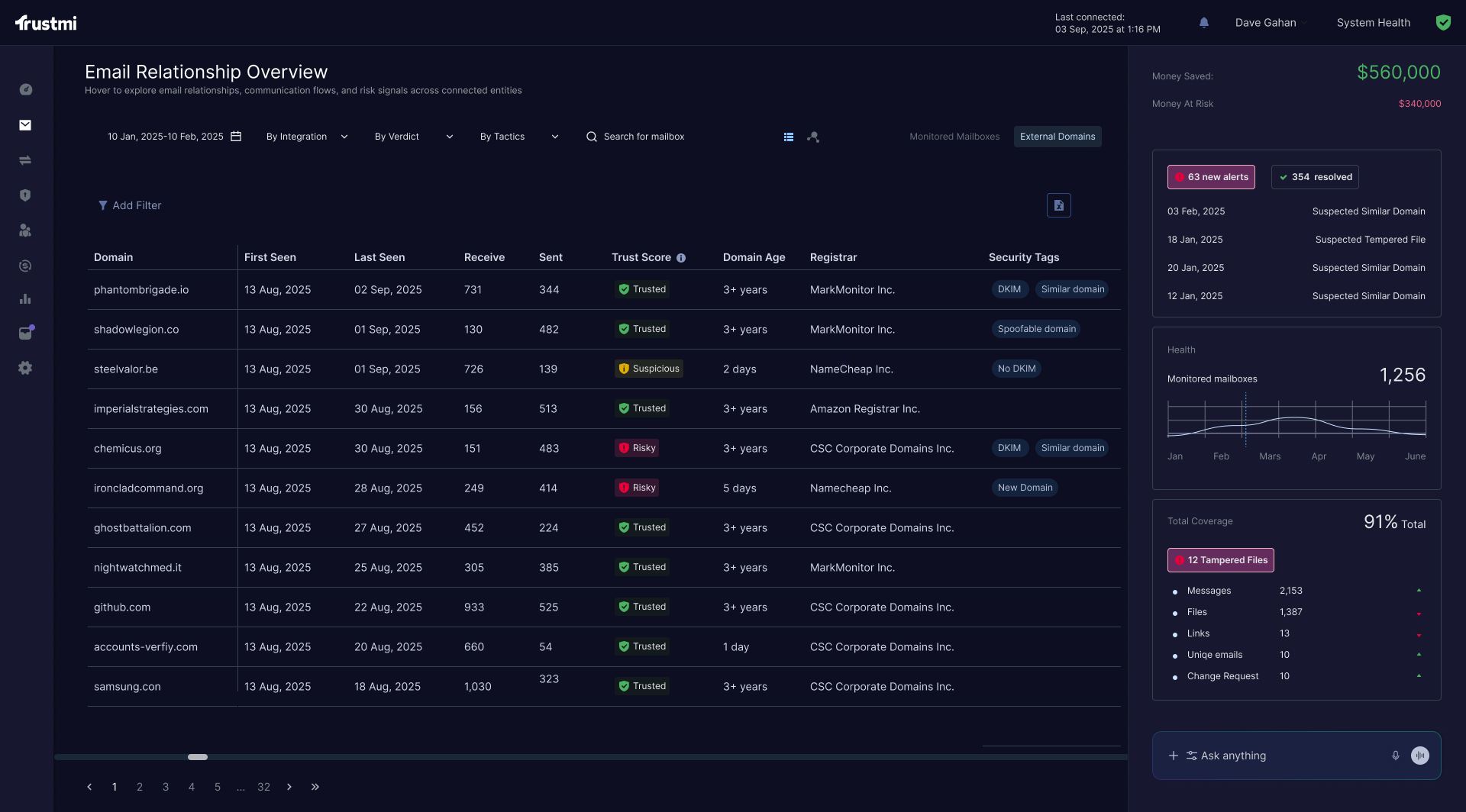
External domains table — a risky domain identified
Flagged: Similar Domain, No DKIM

The analytical starting point: domains and mailboxes, scanned for risk.

The User

InfoSec

CISO | Security Analysts | Threat / Fraud Researchers | Incident Response | GRC / Third-Party Risk

Needs

To quickly understand if something is risky and how it could affect the business.

Needs a clear picture in order to make the right decision without slowing everyone down.

Thinks

What changed that made this risky?

Is this a normal change, or an anomaly?

What triggered this change?

CISO persona Empathy Map

Does

Can see security risks and reports, and has the authority to approve or block vendors and actions that may be risky.

Feels

Feels a lot of responsibility.

Feels pressure not to miss anything important.

Feels concerned about making the wrong decision and being held accountable.

CISO persona

Empathy Map

The Design Approach

From seeing risk to understanding it.

Risk signals alone could tell the CISO that something was wrong, but not what was actually happening. I designed the Relationship View to connect those signals to the people, vendors and communication behind them, creating a clear starting point for deeper investigation.

See Risk in Context

Spot Risk → Follow the Relationship → Understand Why → Investigate → Act

Explore who communicates with whom, spot unusual patterns, and follow a suspicious relationship directly into the investigation.

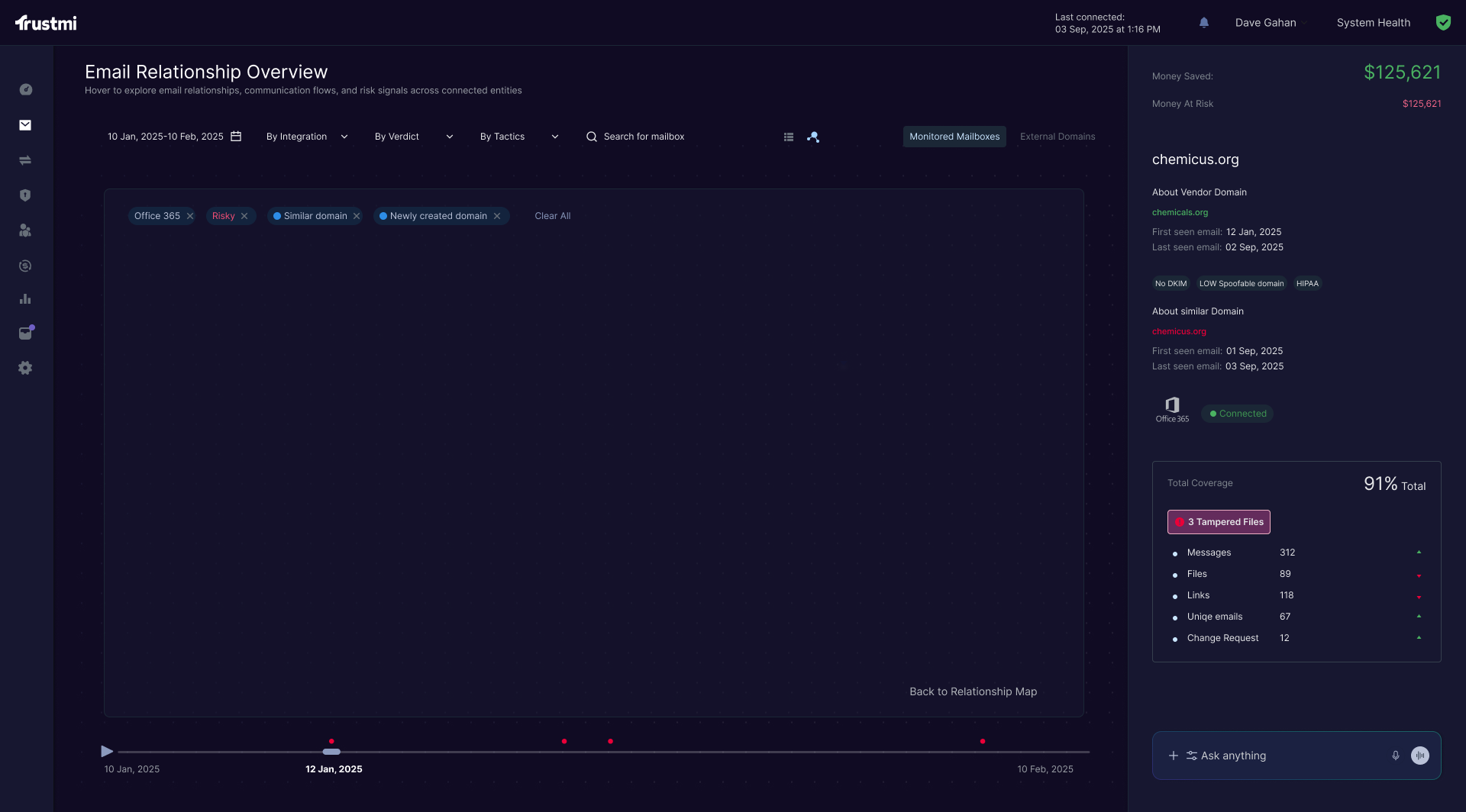
Domain drilldown — empty state
The Investigation

Two entry points. One investigation.

Whether the CISO starts from a risky mailbox or discovers an unusual relationship, both paths lead into the same investigation. I designed the signals, validations and evidence to sit together in one continuous context, so investigating never means leaving the page.

Risk View ↘ INVESTIGATION ↗ Relationship View

Understand why.

The panel explains why an activity needs attention and surfaces the violations connected to it.
Every finding carries a confidence score - here, 94% - so the CISO knows how much to trust it.

Alert panel — key findings overview
From Investigation to Action

Understand the risk.
Then act on it.

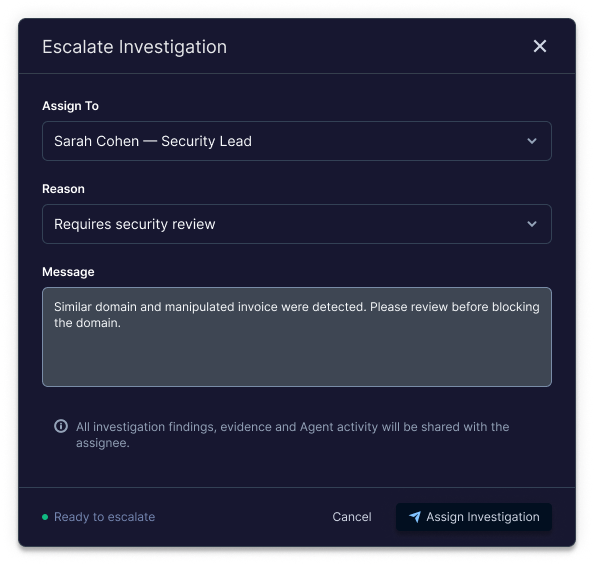
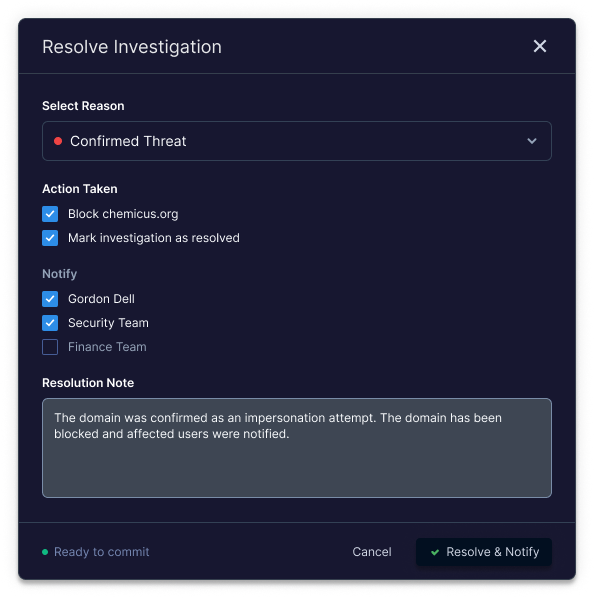
Once the threat is understood, the CISO can resolve the event, reassign it, involve the relevant people or trigger the appropriate response before the risk reaches the payment process.

Detect → Understand → Investigate → Validate → Act
Escalate investigation modal
Resolve investigation modal
See. Understand. Act.

The experience evolved from a monitoring layer into an investigation and decision-making workspace.

Bringing detection, context and evidence into one investigation flow moved the security team from manually investigating individual incidents toward identifying and validating threats before they affect payments.

"We went from investigating around 20 incidents a month to nearly zero."

"Saving time in the investigation process is a measurable ROI."

Customer Result, Reported by Trustmi